
Harvest Festivals of India Across Regions
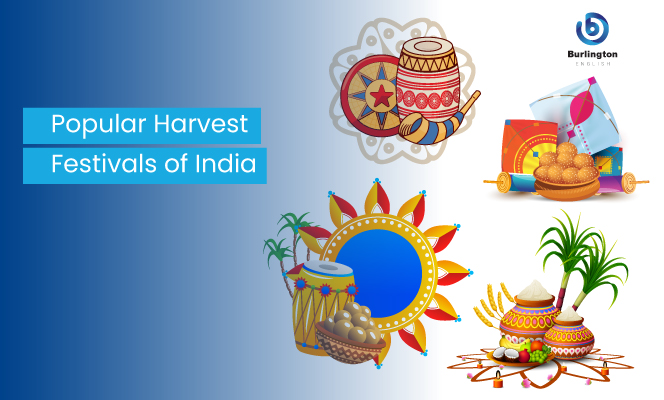
India is a land of diverse traditions and cultures. The festivals of the country document the pulse of mythologies, celestial events, and the change of seasons. Not only is the economy driven by agriculture, but harvest seasons also mark the calendar with festivities.
Our blog highlights the rich diversity of harvest festivals of India traditions across regions, with added details on customs, foods, and significance.
Northern Celebrations
January brings Makar Sankranti, marking the end of winter. Skies fill with colourful kites, especially in Gujarat and other states, where people shout “Kai po che!” as they defeat their opponents in kite-fights. People consume sweet til (sesame) laddoos and khichdi, which symbolise warmth and prosperity.
In Punjab and Haryana, Lohri brings bonfires where families circle flames, tossing rewri (a hard candy made of sesame), peanuts, and popcorn whilst singing folk songs tied to legends like Dulla Bhatti, the heroic rebel. Newlyweds and newborns receive special blessings.
With exuberant bhangra dances, Baisakhi honours the Sikh New Year and wheat harvest.
Amidst ripe mustard fields, Basant Panchami heralds the entrance of spring. Goddess Saraswati is honoured on this day, which is marked with flying kites and yellow clothing.
Southern Traditions
Southern India transforms harvest into visual spectacles.
Tamil Nadu’s four-day Pongal is celebrated with boiling sweet rice (pongal) in clay pots until it overflows, symbolising abundance. Women make intricate kolams (rice-flour designs) at their entrances, and cattle are decorated and made to race in some areas.
In Kerala, Onam spans ten days. It recalls King Mahabali’s prosperous reign through elaborate flower carpets called pookalam and grand vegetarian feasts (sadhya) served on banana leaves with over twenty dishes.
Vishu arranges prosperous ‘first sights’ (Vishu Kani) of gold, fruits, rice, and mirrors.
During Ugadi, pachadi, a chutney blending six tastes—sweet, sour, salty, bitter, spicy, and astringent—to reflect life’s balance, is served.
Eastern and Northeastern Rituals
Eastern traditions emphasise the celebration of rice harvest and tribal heritage.
Assam celebrates Magh Bihu (or Bhogali Bihu) with lavish community feasts. Families come together to make pithas (rice cakes) and burn temporary meji huts. Youth perform vibrant Bihu dances with dhol drums, celebrating the granaries full after harvest.
During Nuakhai, which is celebrated in Odisha, freshly harvested rice is offered to the deities first, followed by feasting and folk dances.
Bengal’s Nabanna is celebrated by offering payesh (rice pudding) to Goddess Lakshmi and preparing rice-flour sweets (pitha).
Northeastern highlights include Meghalaya’s Wangala, the Garo tribe’s 100 Drums Festival to thank the sun god Saljong, featuring rhythmic drumming, dances in traditional attire, and rice beer.
Western and Highland Variations
Western and highland customs add unique flavours.
Maharashtra’s Gudi Padwa raises the gudi—a bamboo pole with a bright cloth, neem leaves, and sugar crystals—as a victory flag. Bitter-sweet neem dishes are eaten for boosting health and vitality.
Mumbai’s East Indian Catholics celebrate Agera with church prayers and blessings, traditional processions decorated with sheaves of grains, cultural dances (lugra), and feasts.
From Meghalaya’s celebratory drums to Punjab’s glowing bonfires, India’s harvest festivals remind us of our agrarian heritage. Amidst changing times, these traditions nurture hope, a feeling of identity, and dreams for future cycles.